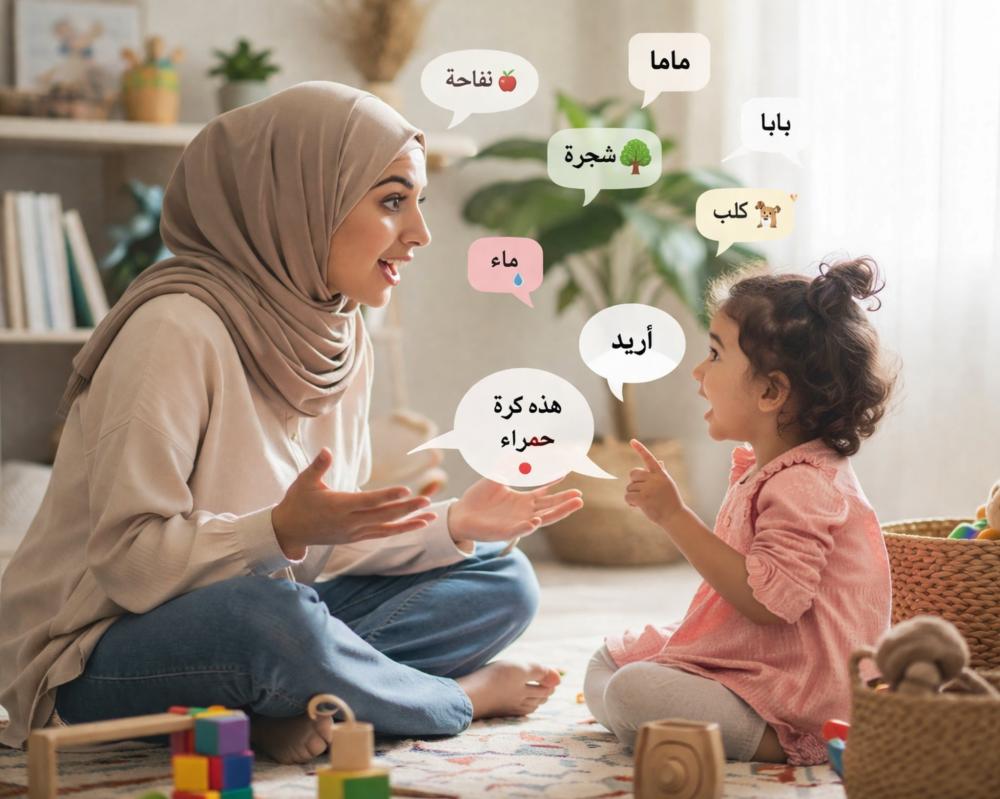
What do you know about the language explosion phase?
A question that is frequently asked is: What is the stage of linguistic explosion that specialists are talking about?
This is an important and sensitive early stage in a child's language development, characterized by a rapid and sudden increase in the number of words a child knows and uses. After initially using only a few words, we suddenly notice a surge in speech, as if words have exploded. The child begins to learn new words rapidly every day, forms short sentences, asks about the names of things, and constantly repeats words they hear. This stage typically occurs between the ages of 18 months and three years and is perfectly normal, yet also a sensitive one, because the language acquired during this time forms the foundation of the child's future language skills.
A child doesn't actually begin learning language when they start speaking; it begins from birth. Before this stage, a child goes through important phases: first, they hear, then they make sounds, then they babble, then they say a word, then two words, and then suddenly their vocabulary starts to increase rapidly. This rapid increase doesn't happen in a vacuum; it comes from the linguistic environment surrounding the child. That's why we always say that language progresses through stages: listening, then understanding, then speaking. A child who is talked to a lot, asked questions, listened to, and has stories read to them enters the stage of explosive language development strongly, while a child who relies on screens or whose needs are met by gestures often has weaker language skills.
Here I'd like to emphasize an important point: a child doesn't learn language solely from hearing, but from speaking. Language is a skill of use, not memorization. Therefore, when a mother is aware of the importance of this stage, she should know that it's a great opportunity to establish and strengthen her child's language, and it's also the stage in which linguistic identity is formed. So, I advise mothers to speak to their children in their native language. The best thing they can do is transform their day with their child into a continuous daily dialogue: talk to them, ask them questions, encourage them to describe things, add new words to their vocabulary, and listen to them even if their speech isn't clear.
If a mother asks me, "What should I do practically?" I tell her, "Don't look for lessons; look for everyday conversation. Talk to your child throughout the day, not just with commands, but with descriptions and questions. Say to him, 'We are putting on our shoes now. These are black shoes. We are going to the park. What will we do in the park?' Let him think and answer, and even if his answer is just one word, repeat it in a meaningful sentence. If the child says, 'Ball,' say, 'Yes, we will play with a ball in the park.' This way, you are teaching him the sentence without him feeling like he is in a lesson."
One thing I always recommend is daily storytelling. It's not just about reading the story, but about getting your child to tell it. After the story, ask them: What happened? Who was in the story? What did they do? At first, they might hesitate, remain silent, or say only a few words, but over time they will learn to organize their thoughts into sentences, then into events, and this is a very important language skill.
It is also important for mothers to be aware of things that can weaken a child's language skills at this stage, such as excessive screen time (phone or television), fulfilling the child's requests without asking them to speak, frequently interrupting and correcting them in a way that makes them hesitant to talk, or making fun of their pronunciation. At this stage, a child needs someone to listen patiently, talk to them often, and give them a chance to express themselves, not someone who cuts their words short.
In conclusion, the language explosion stage is not simply a time when a child learns new words; it is the stage where they learn their mother tongue and their linguistic identity is formed, including the subtle nuances of their accent. They begin to decode language, learning how to use it, how to express themselves, how to narrate, and how to ask questions. If the mother invests in this stage through dialogue, reading, and imaginative play, she builds a strong language foundation and establishes fluency.